How to follow VALORANT Champions Shanghai group stage like a pro analyst
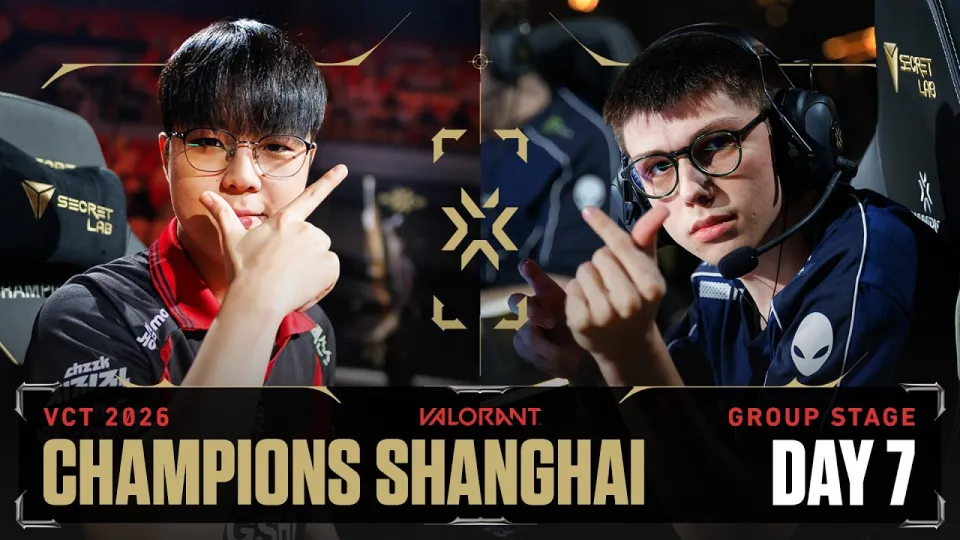
Video: VALORANT Champions Shanghai — Group Stage — Day 7
Need articles like this for your video? They help promote it on YouTube and Google — order them in the Telegram bot @sat_sit_bot. Articles with your video embedded are written and posted by the bot itself — on popular topical sites (no ads). Your first 50 articles are free.
· based on the channel VALORANT Champions Tour
Key takeaways
- Champions Shanghai runs September 24 to October 18, with 16 teams from Americas, CN, EMEA and Pacific.
- Two Masters events in 2026 produced two different champions, so Shanghai is the first true tiebreaker of the year.
- Group stage Day 7 stream ran over five hours and drew repeated complaints about tech pauses in chat.
- Viewers questioned CN's level after lost eco rounds and blown 5v2s, while others argued stronger teams from other regions missed Champs.
- Official updates, brackets and clips land on the VALORANT Esports X account first.
VALORANT Champions Shanghai is the season-ending world championship where 16 teams from Americas, CN, EMEA and Pacific fight for the biggest trophy of the year, and the group stage decides which of them reach the playoff bracket. Following it properly means tracking the standings, the map picks and the patch context rather than just watching kills — and the fastest way to get schedules, results and clips is the official VALORANT Esports account on X. The event runs from September 24 to October 18, so the group stage is the filter that separates contenders from the teams that only looked good in their own region.
What the VALORANT Champions Shanghai group stage actually decides
The group stage is a seeding machine: it eliminates teams and sets the playoff bracket, so every series changes who you might meet in the next round. Sixteen squads arrive from four regions — Americas, CN, EMEA and Pacific — and the format rewards depth, because a single bad map can flip a group. When you open a Day 7 broadcast, the useful first step is to check the standings graphic before the first pistol round, not after.
- Confirm the current group table and which teams are already locked in.
- Note the map veto for each series — it tells you which team is playing to its comfort pick.
- Track round differential, since tiebreakers often come down to it.
- Watch the second half of each map: group-stage collapses cluster there.
Why Day 7 of the group stage matters more than earlier days
Day 7 carries the pressure of a closing window, because teams that started slowly have no room left for a comfortable loss. The broadcast description frames Shanghai as the moment when a new generation of challengers meets established names, and that framing is literal in the standings: two different champions were crowned at Masters events during the season, so no single team has clearly owned the year. A group stage that produces an unexpected seed changes the entire playoff path.
The tech pause problem viewers keep flagging
The most repeated complaint around the Day 7 stream was the volume of technical pauses, with viewers joking that the broadcast was an endless series of them. That matters for how you watch: a paused server is not dead air, it is usually a coach's timeout in disguise. Use the gap to read the economy — who has creds, who is on a save, which ultimate is available next round — and you will understand the following round far better than someone who skipped ahead.
- Check whether the pause came after a lost bonus round; teams often reset their plan there.
- Look at ultimate orbs and ability charges on the HUD during the freeze.
- Note the scoreline when play resumes; momentum swings after long stops are real.
Reading CN's group stage performance without the noise
China's representatives drew the harshest commentary of the day, with viewers pointing to lost anti-eco rounds, blown 5v2 retakes and utility usage that looked improvised once set plays broke down. That criticism is a useful lens, but it is not the whole picture: the same chat argued that several stronger teams from other regions never qualified for Champions at all, which says as much about regional depth as about CN's level. When you evaluate a CN team, separate three things — pistol-round conversion, post-plant discipline, and mid-round adaptation after the first contact — because those are the areas where the gap shows up on broadcast.
How to build a scouting routine from a five-hour broadcast
A full group-stage day runs past five hours, so nobody should watch it linearly; a structured routine gets you more information in less time. Start with the series that affects your team's bracket, then fill in with condensed highlights.
- Watch the veto and the first three rounds of each map.
- Jump to the second-half pistol and the following two rounds.
- Review any round where a team lost a 5v4 or better advantage.
- Log one recurring pattern per team — default setup, retake shape, or ult economy.
- Cross-check your read against the official bracket before the next day.
Small details on broadcast are worth catching too: viewers spotted a Yoru clone that looked for a moment like it was helping hold a site, which is exactly the kind of utility misread that decides a retake.
Useful links
- VALORANT Esports on X — schedules, results and clips.
- VALORANT Esports on Facebook
- VALORANT Esports on Instagram
- VALORANT Esports on TikTok
- VALORANT on Twitch
Final takeaway
The group stage at VALORANT Champions Shanghai is best read as a bracket-shaping event, not a highlight reel: sixteen teams, four regions and a playoff seeding that will define the rest of the tournament. The Day 7 broadcast showed both the competitive tension and the operational friction — long tech pauses, sharp regional debates and rounds lost on small utility mistakes. Track the standings, watch the vetoes, and judge teams on how they adapt after set plays break. The full matchday coverage comes from the VALORANT Champions Tour channel, and for live updates follow VALORANT Esports on X.
Source: VALORANT Champions Shanghai — Group Stage — Day 7 · Markdown version
Questions & answers
How many teams compete at VALORANT Champions Shanghai?
Sixteen teams qualify from four regions: Americas, CN, EMEA and Pacific. They compete for the world championship title across a group stage and a playoff bracket, with the event scheduled from September 24 to October 18.
Why were there so many tech pauses during the Day 7 broadcast?
Viewers repeatedly noted long and frequent technical stoppages during the stream. Broadcasts do not always explain each pause, but they are usually server or hardware issues rather than scheduled breaks, and they can shift momentum when play resumes.
Is China's region really weaker than the others at Champions?
The debate is more nuanced than the chat suggests. CN teams lost several anti-eco rounds and 5v2 situations, which points to mid-round discipline problems, but viewers also argued that stronger squads from other regions failed to qualify at all.
What should I check first when watching a group stage match?
Start with the standings and the map veto, then watch the pistol rounds and the start of the second half. Those moments reveal the most about a team's preparation and how it handles pressure.